You're finally feeling a bit better after the flu, and then you suddenly notice it: extra hair on your pillow, in the shower drain, on your sweater. That can be quite a shock. Fortunately, in many cases this is temporary and easily explained. In this blog, we explain how the flu can affect your hair cycle and what you can do to support your hair and scalp as best as possible during this phase.
About the Author
By Sanne Klomp
Can you lose hair after the flu?
You're finally feeling a bit better after the flu, and then you suddenly notice it: extra hair on your pillow, in the shower drain, on your sweater. That can be quite a shock. Fortunately, in many cases this is temporary and easily explained. In this blog, we explain how the flu can affect your hair cycle and what you can do to support your hair and scalp as best as possible during this phase.
For many people, flu (especially with a fever) can cause the body to temporarily shift its ‘priorities’: energy is directed towards recovery and the immune system. Hair is less important to the body during such a period. As a result, more hairs than normal can enter a resting phase, resulting in extra hair loss. This is usually diffuse: spread across the scalp, without any obvious bald patches. A similar pattern can also occur with hair loss after COVID-19, where the body temporarily sheds extra hair after a period of severe illness.
What happens in your hair cycle after fever or illness?
Your hair grows in phases. Normally, most of your hair is in the growth phase (anagen). When faced with a significant physical stressor (such as flu with fever), your body can push more hair follicles into the resting phase (telogen) at an accelerated rate. This is called telogen effluvium: a temporary form of hair loss caused by a disruption in the hair cycle.
Important to know: the hair loss often does not occur immediately. You usually notice it weeks or months later, because hairs first “come loose” after they have entered the resting phase.
When does hair loss start after the flu?
You usually notice it 6 to 12 weeks after the illness/fever. This corresponds to what is often described in cases of hair loss after fever, where hair loss is regularly seen around 9 weeks after a period of fever.
This is also exactly why it sometimes feels like it comes out of nowhere: you have been better for a long time, but your hair cycle is lagging behind.
How long does hair loss after flu last?
In many cases, your hair growth cycle will recover on its own. Hair loss after illness/fever often takes months to recover, with noticeable improvement around 6–9 months. That doesn't mean you'll continue to lose hair at the same rate throughout that time. Usually, it builds up, peaks for a period, and then subsides again.
Why can flu cause hair loss?
Physical stress and stress hormones
Fever and infection put pressure on the body. This can cause stress hormones (such as cortisol) to rise, which can affect the hair cycle and push hair into the resting phase.
Reduced intake or increased need for nutrients
When you are ill, you often eat less, while your body actually needs a lot of nutrients to recover. Deficiencies (e.g. iron, zinc, vitamin D or B12) can increase hair loss or slow down recovery.
Medication can sometimes play a role
Some medicines can also affect the hair cycle. Hair loss due to medication often occurs with a delay, for example 2 to 4 months after starting. This is similar to the timing we see with telogen effluvium.
Hair loss after flu vs. alopecia areata: when should you be extra vigilant?
Hair loss after flu usually manifests as diffuse loss (thinning all over). If you notice round/patchy bald spots, there may be something else going on, such as alopecia areata (an autoimmune reaction). This is a different type of hair loss and often requires a different approach or medical assessment. If you are unsure, it is wise to consult a specialist.
Advice personalized to your hair needs
Take our Hairtest to find the best products for your hair within 2 minutes!
What can you do if your hair falls out after the flu?
Be gentle with your hair: Your hair is in a “shedding phase”. Pulling hard, tying it tightly, brushing aggressively or heat styling can increase the feeling of hair loss. It is better to opt for gentle routines and give your scalp a rest.
Support your recovery from within: Illness and fever can affect your reserves. Eat regularly and protein-rich meals (again), and if symptoms persist, consider having your values checked by your GP. Deficiencies can increase hair loss or make it last longer. To replenish these more quickly, you can also use various supplements.
Reduce extra stress where you can: We know that reducing stress is easier said than done. But every mini step helps: sleep, structure, walking, breathing space. Stress (and cortisol) can cause telogen effluvium.
Consider targeted hair growth products
When it comes to hair loss after the flu, it's all about resting the scalp, supporting the hair roots and restoring from within. The products we recommend during this phase are:
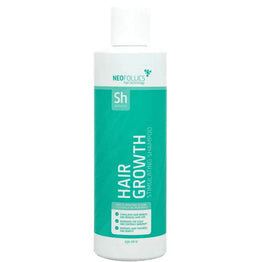
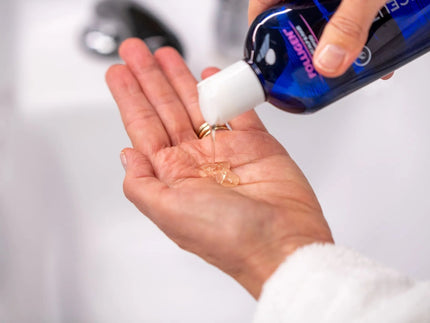
Neofollics Shampoo:a mild but targeted anti-hair loss shampoo that supports the scalp and stimulates the hair roots. Great as a basis for your routine, especially when your hair is temporarily more vulnerable.
Spectral.F7 Lotion: A leave-in lotion developed to tackle hair loss caused by stress factors and stimulate hair growth. Useful if you notice that your hair loss has clearly increased after the flu and you want to actively support your hair roots.
Revita.SOD Tablets:a supplement that targets oxidative stress and hair loss caused by stress, containing melatonin as an antioxidant, among other ingredients. This can be a nice addition if your body is still recovering and you want to give your hair extra support from within.
Contains 1% Piroctone olamine, also effective against dandruff
seven powerful plant extracts including Ecklonia cava and Raspberry ketone
the hair growth molecules Caffeine and Niacinamide
Argan oil and Cinnamon oil to care for the scalp and hair
This lotion is suitable for men and women with mild hair loss (non-hereditary) and thinning (growing) hair, for example due to stress and aging.
The lotion generally to be used to improve hair quality and as a preventive treatment against hair loss.
Spectral.F7 can also be used as an effectiveness booster of other treatments (including lotions) against hair loss.
The formula is specially developed for hair loss due to stress and based on the latest developments for the treatment of alopecia.
Thanks to the right nutrients and antioxidants, the supplements act on all factors related to alopecia: oxidative, inflammatory and hormonal.
Suitable for men and women.
As a content and hair growth specialist, Sanne makes complex hair knowledge understandable. Working closely with our product manager and...
As a content and hair growth specialist, Sanne makes complex hair knowledge understandable. Working closely with our product manager and certified chemists, she translates complex information into understandable advice. In this way, she contributes to Hairgivers' mission to offer the right solution for every problem.