This page contains all the information you need to know about the popular hair growth treatment minoxidil, which is applied to the scalp in the form of a topical lotion. Minoxidil is the oldest officially registered medicine against hair loss, which means it can only be sold online by registered providers such as the Hairgivers. But how does it work, how do you use it correctly, what type of minoxidil should you use, all these questions will be answered for you in this blog.
Minoxidil is the best researched hair growth treatment available to you
About the Author
By Pieter Zee
Minoxidil – everything you need to know
This page contains all the information you need to know about the popular hair growth treatment minoxidil, which is applied to the scalp in the form of a topical lotion. Minoxidil is the oldest officially registered medicine against hair loss, which means it can only be sold online by registered providers such as the Hairgivers. But how does it work, how do you use it correctly, what type of minoxidil should you use, all these questions will be answered for you in this blog.
Minoxidil is the best researched hair growth treatment available to you
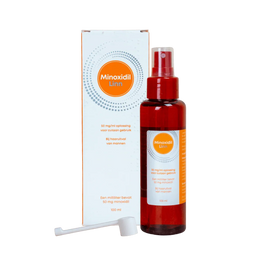
If you want to buy Minoxidil, then you've come to the right place. We are an official online provider of medicine, allowing you to order minoxidil online easily and without a prescription. We sell Minoxidil of the brand Linn Pharma in the strengths 2% and 5%.
Version recommended for women.
This medicine has been approved for the treatment of hereditary hair loss (androgenetic alopecia) after long-term research.
Despite the lower concentration, research shows that 2% Minoxidil is effective with consistent daily use.
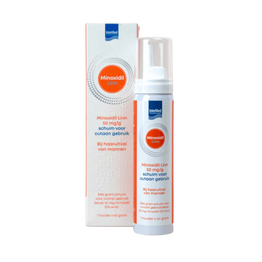
The form of Minoxidil we recommend for most men.
The 5% concentration has been shown to be more effective than 2% in stimulating hair growth.
Minoxidil can provide visible hair growth after 4 months with effective use.
As potent as the 5% spray, but more user-friendly and gentle on the skin.
The foam does not contain propylene glycol, a common cause of itching and redness in spray users.
The foam form absorbs faster than spray and does not leave a greasy film.
Minoxidil has been around for quite some time. It was developed in the fifties of the last century as an antihypertensive agent in pill form under the brand name Loniten. During clinical trials, researchers observed that some patients experienced unexpected hair regrowth as a side effect, including on the scalp, face, and body.
This side effect prompted further research into minoxidil as a potential treatment for hair loss. By the late 1980s, the American FDA approved a topical formulation of minoxidil specifically for hair loss, marketed under the name Rogaine in the United States.
Minoxidil as hair growth lotion
By now, the patent on Minoxidil has expired, and many cheap generic versions have been brought to the market (Kirkland, Spectral UHP). Minoxidil lotion is not only available as a 5% solution, but a special 2% solution is also available for women. Apparently, studies have shown that a higher dosage is much more effective: of the 5% version, 45% would be more effective than the 2% version.
Yet, people are often recommended to start with a lighter version to see if any side effects occur, such as unwanted facial hair growth or low blood pressure. It is always advisable to consult your doctor before using higher concentrations of minoxidil.
How does Minoxidil work?
A lot of research has been done in the past years to explain the effect of hair regrowth of minoxidil. The effect is not yet completely understood. Originally, it was believed that minoxidil improves the blood circulation of the scalp, but this seems outdated. The most recent theory is that it is because minoxidil belongs to the group of medicines called 'potassium channel openers' (PCOs). It seems that PCOs stimulate hair regrowth and have a positive effect on the hair density.
It does this by widening blood vessels and increasing blood flow to the scalp, which supplies more oxygen and nutrients to hair follicles. This improved circulation supports hair follicle health and growth. It also extends the growth phase of the hair growth cycle, allowing hair strands to grow longer and thicker before shedding. This effect is particularly useful for people experiencing androgenetic alopecia, where the growth phase is often shortened.
In any case, the agent has absolutely no effect on the hormone balance, unlike finasteride and dutasteride. Because it is not a hormonal agent but has a general stimulating effect on the hair growth, minoxidil can be used for many forms of hair loss (not only androgenetic).
Expected results of Minoxidil lotion
Minoxidil has many satisfied users as a topical hair loss treatment, but it is not a panacea. A positive effect is determined in 60 to 80% of its users (stabilization of regrowth), but the result is only 'cosmetically satisfactory' for 6 to 30% of its users. People who have been suffering from hair loss for a long time can benefit from it, but completely new hair growth on bald spots is a rare occurrence. The agent works best for men and women who have been suffering from hair loss between 5 and 10 years, particularly on the crown.
There is reason to believe that topical minoxidil works as long as it is continuously applied. The recovered hair by minoxidil will remain 'minoxidil dependent'. Research has shown that men who had regrowth with both finasteride and Minoxidil, noticed regression after stopping with the use of minoxidil.
Although a minoxidil solution stimulates hair growth, it actually does not change anything about the underlying cause of androgenetic hair loss (reduction in hair growth due to affected hair follicles by DHT, dihydrotestosterone). So the agent has no anti-androgenic effect and therefore DHT binding to androgen receptors of the follicles is not obstructed. Eventually, the use of Minoxidil alone is not enough for most people to permanently prevent hair loss.
Just like all other hair growth agents, Minoxidil needs to be used continuously in order to maintain any obtained results.
Advice personalized to your hair needs
Take our Hairtest to find the best products for your hair within 2 minutes!
Minoxidil lotion can be regarded as a safe agent. Because it is a topical solution that needs to be applied on the head, some side effects are reported. The side effects that are occasionally reported are: dry skin, scalp irritation, dizziness and headaches. Additionally, a slight increase in body and facial hair can occur, due to small amounts of minoxidil entering the bloodstream through the skin.
Some doctors believe that minoxidil can be dangerous for people with cardiovascular disease. Other adverse reactions when using minoxidil to regrow hair are mentioned on internet forums. People with hair problems mention side effects such as eye bags caused by fluid retention.
Topical minoxidil foam
In 2006 a minoxidil topical foam was introduced. This is a user-friendly, foam-formulation of minoxidil created to treat hair loss with improved convenience and comfort compared to the traditional liquid solution. Only available in 5% concentration for men, the foam contains the same active ingredient, delivering effective hair growth benefits by enhancing blood flow to hair follicles, opening potassium channels, and prolonging the growth phase of your thinning hair.
One of the key reasons for its popularity is its ease of application—this foam dries quickly, doesn’t leave a greasy residue, and is less likely to cause scalp irritation due to the absence of propylene glycol, an ingredient in the liquid version that can sometimes lead to discomfort. Additionally, minoxidil foam is often easier to apply evenly, allowing better absorption for people with sensitive skin or shorter hair.
As potent as the 5% spray, but more user-friendly and gentle on the skin.
The foam does not contain propylene glycol, a common cause of itching and redness in spray users.
The foam form absorbs faster than spray and does not leave a greasy film.
Another treatment top stimulate hair growth with minoxidil is called oral minoxidil, or minoxidil in tablets. Read more about it here.
Minoxidil in combination with other products
The combination ofFinasteride and Minoxidil is popular among people with androgenetic hair loss. Although studies have shown that the use of Finasteride alone is more effective than using only Minoxidil in the battle against AGA in the long term, it was revealed that the agents work great together, better than just one or the other. The reason for this could be because both the growth is being stimulated and the androgenetic causes are dealt with.
Another popular combination is minoxidil with a good quality shampoo.
The new generation minoxidil: nanoxidil
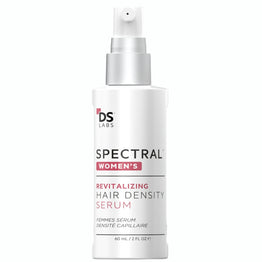
Nanoxidil is an ingredient which is available in the lotion Spectral DNC-N. Unlike Minoxidil, Nanoxidil is especially developed to stimulate hair regrowth. For this, it has been studied how the molecule of Minoxidil could be improved to make it more effective and to reduce side effects. From this research, Nanoxidil has been developed. Nanoxidil has a lower molecular weight, improving absorption.
Spectral DNC-N contains various extra ingredients to stimulate the effect of Nanoxidil and to increase the effect on the hair growth. Also, there are far fewer side effects to be expected. For people who experience side effects with Minoxidil, switching to Nanoxidil might be a good alternative.
Nanoxidil is also a good replacement for brand name Minoxidil lotions like:
Foligain.F5 Foam
Minoxidil 5%
Foligain.P2 Minoxidil 2%
Regenepure Minoxidil 5%
Foligain.N5
Foligain.P5 Minoxidil 5%
Foligain.D5
MinoxidilMax
Is there a difference between Minoxidil and Nanoxidil?
Minoxidil is a drug that was initially developed against hypertension. Clinical studies have shown that the test subjects got stronger hair growth because of the use of minoxidil. As a lotion, it is one of the most well known treatments against hair loss. However, apart from this excellent effect, a minoxidil treatment comes with a lot of side effects, such as heart problems, headaches, acne and local irritation. Women are more sensitive to Minoxidil, that is why it is recommended that women use a maximum concentration of 2%.
Nanoxidil was especially developed to maximize the stimulation of hair growth, by taking away the side effects of Minoxidil as a lotion and to surpass the effectiveness of stimulating hair growth. The difference between Minoxidil and Nanoxidil is mainly the difference in molecular structure. The agent Nanoxidil, which is responsible for opening the ion channels, has a larger molecular weight than Minoxidil. This is the reason it is absorbed better by the skin. Clinical studies have shown that Nanoxidil has much fewer side effects than Minoxidil.
The lotion Spectral.DNC-N contains, apart from Nanoxidil, various ingredients to promote the absorption and to improve the hair growth in multiple ways. Minoxidil lotions however usually only contain Minoxidil. Additional substances that stimulate hair regrowth include Adenosine, Aminexil, procyanide B2 and copper peptides.
Spectral.DNC-N with Nanoxidil has been clinically tested for safety and effectiveness in over 250 people for 1 year.
Switch from minoxidil to another lotion
Many customers who have used minoxidil in the past have switched because of side effects or a non-satisfactory effect.
If you are currently using minoxidil and want to switch to a different lotion, we recommend using both lotions next to each other for two weeks. For example minoxidil in the morning and the new lotion in the evening. After two weeks, your scalp and hair follicles will get used to the new lotion and you can start using the new lotion twice a day.
Six powerful plant extracts including Ecklonia cava and Raspberry ketone
Peptides that improve scalp blood flow and inhibit inflammation
Hair growth molecules Adenosine, Vividine and Aminexil
Are you looking to treat hair loss or thinning hair? Perhaps you have already bought Minoxidil or are considering using it. But you're unsure about how to exactly use Minoxidil? When will you see results? And what should you look out for? We will take you step-by-step through the correct and best use of minoxidil.
What is the difference between minoxidil 2% and 5%?
Minoxidil is available in three varieties: 2% minoxidil, 5% minoxidil and minoxidil 5% foam. All contain the same active ingredient, but in different strengths and solutions.
2% Minoxidil
This variant is milder and is usually recommended for women. Because women can be more sensitive to side effects, a lower dosage is often sufficient. The risk of skin irritation is also lower with long-term use.
5% Minoxidil
This is the stronger variant and is mainly used by men. Some women also opt for 5%, for example, if the 2% does not give enough results. Note: in women, 5% may increase the chance of side effects, such as skin irritation or hair growth in undesirable places (such as the face).
Minoxidil 5% foam
The minoxidil foam is a user-friendly foam version of minoxidil, intended for men. Unlike the lotion, the foam does not contain propylene glycol, a substance that often causes skin irritation. As a result, the foam is better tolerated, with less risk of side effects.
Version recommended for women.
This medicine has been approved for the treatment of hereditary hair loss (androgenetic alopecia) after long-term research.
Despite the lower concentration, research shows that 2% Minoxidil is effective with consistent daily use.
The form of Minoxidil we recommend for most men.
The 5% concentration has been shown to be more effective than 2% in stimulating hair growth.
Minoxidil can provide visible hair growth after 4 months with effective use.
As potent as the 5% spray, but more user-friendly and gentle on the skin.
The foam does not contain propylene glycol, a common cause of itching and redness in spray users.
The foam form absorbs faster than spray and does not leave a greasy film.
For good results, it is important that you use minoxidil correctly and consistently. Below, you can read how to do that:
1. Apply minoxidil twice a day
Use minoxidil in the morning and evening, with approximately 12 hours between applications. Setting fixed times will help you remember.
Tip: Set an alarm on your phone or place the bottle in a visible spot in the bathroom.
2. Make sure your scalp is dry.
Always apply minoxidil to a dry scalp. Just washed your hair? Then dry it first with a towel or hairdryer. Minoxidil is absorbed less well on wet hair, making it less effective.
Tip: Plan your hair washing around your minoxidil routine. For example, wash your hair a little earlier so that your scalp has enough time to dry completely before you apply the product.
3. Use the correct amount: 1 millilitre at a time
Use 1 millilitre (ml) per application. Linn Minoxidil has a handy atomizer. Press it 6 times to get 1 ml. Make sure you clean the atomizer well so that it does not become clogged.
Apply the liquid directly to the scalp, not the hair. Spread it over the areas where your hair has thinned or where you are losing hair. These can be the temples, the crown or the hairline, for example.
Tip: Gently massage the liquid in with your fingertips to improve absorption. Wash your hands after application to prevent the minoxidil from getting on other parts of your skin.
4. Allow it to be absorbed properly
After applying, the minoxidil must be absorbed properly. Therefore, make sure you only use styling products when your scalp feels dry. It is also best not to use a hair dryer immediately after application.
Tip: Avoid wearing a cap, hat or tight hairband during the absorption period. This prevents the product from being wiped off or from being absorbed less effectively.
What do you need to know before starting to use minoxidil?
Possible side effects decrease after prolonged use
Minoxidil is generally well tolerated, but at the start of use, there may be mild side effects. These may include headaches, a dry or irritated scalp, or in rare cases, dizziness. These reactions usually occur because minoxidil is dissolved in alcohol and propylene glycol – ingredients that are necessary for the active ingredient to effectively penetrate the hair follicles. Fortunately, most side effects diminish the longer you use the product, because the scalp gets used to it.
Minoxidil does not work immediately
Those who start using minoxidil need to be patient. The effect is not immediately visible: on average it takes 3-4 months or more before the first results are noticeable. In the beginning, it may even seem as if you are losing more hair – a phenomenon called 'shedding'. This is because old hairs fall out faster to make room for new, stronger hairs. This phase is temporary and is part of the hair growth cycle recovery process. Consistent use is essential: if you interrupt the treatment, the results achieved may be lost again in 3 to 4 months. Tip: if you suffer from shedding, don't give up! This means that the product is working.
When will you see results?
As we mentioned before, minoxidil does not work immediately! It is important to be patient and continue to use the product twice a day. You can expect to see results after a few months.
First results after 3 months
Research shows that it takes at least 3 months before you can see visible improvement. For some people it happens faster, for others it takes a little longer. Most users notice that hair loss decreases and that new, fine hairs start to grow between 3 and 6 months.
What happens if you stop?
Minoxidil only works as long as you continue to use it. If you stop, the hair that has returned thanks to minoxidil will fall out again after a few months. So if you are using the product with good results, it is important to continue using it.
Minoxidil 2% or minoxidil 5%: What is the difference and which is right for you?
When choosing minoxidil, you often see two types: 2% and 5%. What exactly is the difference between these two strengths, and for whom is which version intended?
Minoxidil 2%: mild choice for women
Minoxidil 2% is the lighter variant and is mainly advised to women with hereditary hair loss. This is because women are often more sensitive to the side effects of minoxidil. The 2% solution is weaker, but still works well for hair loss. Women who use minoxidil 2% often notice after a few months that hair falls out less quickly and sometimes even thickens.
In addition, minoxidil 2% is somewhat gentler on the scalp, so there is less chance of irritation, redness or dry skin. For women with mild to moderate hair loss, this is often a good and safe start.
Version recommended for women.
This medicine has been approved for the treatment of hereditary hair loss (androgenetic alopecia) after long-term research.
Despite the lower concentration, research shows that 2% Minoxidil is effective with consistent daily use.
Minoxidil 5% is a stronger version of the drug. This higher concentration is usually recommended for men with hereditary hair loss. The 5% works more powerfully than the 2% version. This can make hair appear fuller and thicker faster in many men.
Sometimes women with severe hair loss also choose minoxidil 5%, but this is often done in consultation with a doctor or specialist. This is because the 5% version can cause more side effects, such as itching, hair growth in unwanted places or flaking of the scalp. The 5% also has a foam variant for people that prefer a foam over a lotion. For some, the foam solution is easier to tolerate on the scalp than the lotion.
The form of Minoxidil we recommend for most men.
The 5% concentration has been shown to be more effective than 2% in stimulating hair growth.
Minoxidil can provide visible hair growth after 4 months with effective use.
As potent as the 5% spray, but more user-friendly and gentle on the skin.
The foam does not contain propylene glycol, a common cause of itching and redness in spray users.
The foam form absorbs faster than spray and does not leave a greasy film.
As potent as the 5% spray, but more user-friendly and gentle on the skin.
The foam does not contain propylene glycol, a common cause of itching and redness in spray users.
The foam form absorbs faster than spray and does not leave a greasy film.
Both the 2% and 5% minoxidil usually provide visible results after about 4 months. The big difference is mainly in the strength of the effect. Research shows that the 5% solution is about 45% more effective than the 2% version when it comes to stimulating hair growth.
Animportant study examined 5% and 2% minoxidil in women with hereditary hair loss. In this 48-week study, 381 women used either minoxidil 5%, minoxidil 2%, or a placebo twice daily. It looked at the increase in thicker hairs and how doctors and patients rated hair growth and scalp coverage.
After 48 weeks, the 5% minoxidil scored better than placebo on all metrics, and was also rated more positively by the women themselves than the 2% variant. The 2% minoxidil performed better than placebo, but the difference was perceived less strongly by the patients themselves.
Both concentrations improved the participants' self-perception, although the 5% minoxidil was somewhat more common with side effects such as itching, irritation and unwanted hair growth outside the scalp.
Though, doctors often recommend starting with the lighter 2% solution, especially to check how your skin reacts. The 2% solution is less likely to cause side effects such as skin irritation or unwanted hair growth in other places (e.g. on the face). Only if it turns out that your skin tolerates the 2% well or if hair loss is more severe, switching to minoxidil 5% may be a next step. Remember: minoxidil only works as long as you continue to use it daily.
Advice personalized to your hair needs
Take our Hairtest to find the best products for your hair within 2 minutes!
Minoxidil is a safe drug and a hair loss medicine that is officially recognised in many countries as an over the counter medicine. Nevertheless, minoxidil can cause side effects, especially in the beginning. With the 5% version, these are somewhat more common. Possible side effects include:
Headache
Irritated, dry scalp
Sometimes extra hair on areas outside the scalp (e.g. the forehead)
The 2% minoxidil usually causes fewer symptoms because the dose is lower. This is why it is often chosen by people with sensitive skin.
To sum up
Minoxidil is a proven remedy for hair loss, but it is important to choose the right strength to suit your situation. Use the product daily and be patient, as hair growth takes time!
Minoxidil for women: how to use it?
Female hair loss is a significant problem, particularly for women. It can cause a great deal of embarrassment, particularly as it is less common for women. If it happens to you, it will still be painful. There are various possible causes of hair loss in women. Changes in hormones, diet or stress can be the reason, for example. It can also be caused by a disorder. If baldness runs in your family, the most likely reason is androgenetic alopecia. In this case, minoxidil is an effective treatment for hair loss. This medicine is effective for people with a family history of hair loss.
Female pattern hair loss problem for women
Female pattern baldness is a significant issue that affects many women worldwide and can have a profound emotional and psychological impact. Unlike male pattern baldness, which is widely acknowledged and discussed, hair loss in women is often overlooked or misunderstood, leading to feelings of frustration and isolation.
The thinning typically occurs at the crown and top of the scalp, gradually leading to a wider part and overall loss of hair density. For many women, this condition not only impacts their appearance but also their self-esteem and confidence.
While lifestyle changes such as improving your diet, managing stress, and taking vitamins are often suggested as first-line measures to combat hair loss, they may not always be effective in addressing hair loss. When these steps don't yield results, the next viable option for many women is turning to minoxidil, a clinically proven topical solution.
Minoxidil is specifically formulated to stimulate hair follicles, slow the progression of hair loss, and in some cases, promote regrowth.
Unfortunately, many women feel misunderstood by their doctors, as hair loss is frequently treated as a cosmetic issue rather than a medical condition. This can lead to women feeling dismissed or unsupported in their quest for a solution. The emotional toll this takes is often overlooked, even though hair is deeply tied to identity and self-image for many women. The psychological effects of hair loss—ranging from anxiety to depression—can be just as challenging as the physical condition itself.
By using minoxidil, you can have access to a proven, active treatment for hair regrowth that may offer relief when other methods have failed. While it takes time to see results, typically around four to six months of consistent use, minoxidil has been shown to be effective in halting hair thinning and promoting new growth.
For women struggling with hair loss, finding a solution through medical treatment can restore not only their hair but also their confidence, providing hope for a better quality of life.
How Minoxidil can help with female pattern hair loss
Minoxidil works by stimulating blood flow in the scalp, sending oxygen and nutrients to help hair follicles stay in the growth phase longer. This leads to thicker, healthier hair and can even help to regrow hair in areas where it has been lost.
Version recommended for women.
This medicine has been approved for the treatment of hereditary hair loss (androgenetic alopecia) after long-term research.
Despite the lower concentration, research shows that 2% Minoxidil is effective with consistent daily use.
Version recommended for women.
This medicine has been approved for the treatment of hereditary hair loss (androgenetic alopecia) after long-term research.
Despite the lower concentration, research shows that 2% Minoxidil is effective with consistent daily use.
Version recommended for women.
This medicine has been approved for the treatment of hereditary hair loss (androgenetic alopecia) after long-term research.
Despite the lower concentration, research shows that 2% Minoxidil is effective with consistent daily use.
What is the best way to use topical minoxidil for a woman?
The way you use it is as follows:
Apply the product to the scalp and spread it out with your fingertips to ensure that the medicine is evenly distributed
Repeat twice a day.
The result can be seen after four months.
Minoxidil is a trusted hair regrowth treatment recommended by dermatologists for its effectiveness and safety.
Minoxidil may therefore help women to control their hair loss. In some cases, regrowth may even occur. The best time to start using it is at the first signs of hair loss. No results are to be expected on completely bald skin. This hair loss treatment is most effective when used consistently and as directed.
Advice personalized to your hair needs
Take our Hairtest to find the best products for your hair within 2 minutes!
Two varieties of minoxidil are available on the market as part of various hair loss treatments. Minoxidil 2% and 5%. The 5% can also come in a foam variant. For women, minoxidil 2% is formulated, as the minoxidil 5% can have annoying side effects such as facial hair or unwanted hair growth on other areas more quickly.
Version recommended for women.
This medicine has been approved for the treatment of hereditary hair loss (androgenetic alopecia) after long-term research.
Despite the lower concentration, research shows that 2% Minoxidil is effective with consistent daily use.
The form of Minoxidil we recommend for most men.
The 5% concentration has been shown to be more effective than 2% in stimulating hair growth.
Minoxidil can provide visible hair growth after 4 months with effective use.
As potent as the 5% spray, but more user-friendly and gentle on the skin.
The foam does not contain propylene glycol, a common cause of itching and redness in spray users.
The foam form absorbs faster than spray and does not leave a greasy film.
We recommend minoxidil manufactured by Linn Pharma as the best minoxidil for women to treat hair loss. They have a 2% solution that is best suited for women, but also a 5% solution. This is recommended for men. Linn Pharma is a Dutch pharmaceutical company that must adhere to strict Dutch legislation, which means the standard by which this product was developed is high.
What is the best way to apply minoxidil for women?
The best way for a woman to apply the lotion with minoxidil for your hair growth is over the entire scalp. This is because female pattern hair loss differs from male pattern baldness, where men often develop a receding hairline or bald spot. The right way to apply minoxidil for women is therefore different. With men, baldness often occurs at the inlets or the crown. Localised baldness is thus more likely to occur. In women, hair often thins over the entire scalp or at the middle parting. This is called diffuse hair loss. The method of application is then to draw partings about 1 centimetre wide in towel-dried hair, so that the scalp is easy to maintain.
How often to use Minoxidil
Minoxidil should be used twice a day, in the morning and at night, for optimal results. It is recommended to apply the solution directly to the scalp, using a dropper or spray bottle, and to massage it in gently. It is also important to note that minoxidil should not be used more than twice a day, as this can increase the risk of side effects.
Which steps should be considered when using minoxidil for women?
Apply it twice a day on dry scalp.
It is best to do this in the morning and in the evening with the corresponding pipette.
Preferably, do this with about 12 hours in between.
It is essential to wash your hands after use and avoid touching other areas.
It is important to distinguish between the 2% and 5% variant. There is a chance that the 5% has unpleasant side effects for a woman, but that is not necessarily the case. The new hair growth often has a different structure and colour than the original hair. It is not recommended to use minoxidil during pregnancy or when breastfeeding, and pregnant or nursing women should avoid using it.
Safety and precautions
Who should not use minoxidil?
Minoxidil is not recommended for use by pregnant or nursing women, as it has not been studied in these populations and its effects on the fetus or baby are unknown. Additionally, people with heart disorders or low blood pressure should not use minoxidil, as it can cause a decrease in blood pressure. People with low iron, hypothyroidism, or autoimmune diseases should also consult their doctor before using minoxidil.
Common side effects of minoxidil
The most common side effects of minoxidil are itching and redness of the treated areas of the scalp. These side effects are usually mild and temporary, but in some cases, they can be more severe. Other possible side effects of minoxidil include dryness of the scalp, flaking, and unwanted hair growth on other areas of the skin. If you experience any of these side effects, you should consult your doctor or dermatologist for advice.
When will the use of minoxidil give the best result?
For optimal results, using minoxidil consistently and correctly is crucial. Applying it as directed and following the prescribed dosage are key to seeing improvements. However, it’s also essential to consider that hair loss can stem from a variety of causes, and the effectiveness of minoxidil largely depends on the underlying condition.
For individuals experiencing androgenic alopecia (hereditary hair loss) and thinning hair, minoxidil has been shown to have the most significant positive impact, particularly in the early stages of hair thinning. This form of hair loss is common in both men and women, and minoxidil works by promoting blood flow to hair follicles, stimulating regrowth.
In addition, research suggests that women under the age of 40 see the best results from minoxidil. The product tends to be more effective in cases of mild to moderate thinning as opposed to advanced hair loss, where follicles may already be too damaged to recover.
It’s important to note that patience is key when using minoxidil, as visible improvements usually take time. Most users start seeing changes after four months of consistent use, but in some cases, it may take up to six months to notice significant regrowth. Continued use is necessary to maintain results, as stopping the treatment could lead to a return of hair loss over time.
14%
stronger effect on increase in length of hairs
66%
more inhibition of 5α-reductase
37
increase in hair growth after so many days.
Topical application of Ecklonia cava
The above-mentioned results indicate that Ecklonia cava extract can be effective in the treatment of hair loss and can be used in topical form as a natural alternative to finasteride and minoxidil. Ecklonia cava even shows a stronger effect on the increase of hair follicle length than minoxidil.
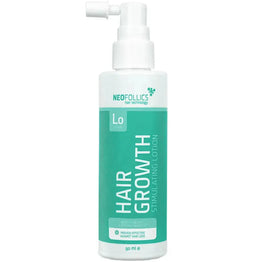
Ecklonia cava is an active ingredient in both the shampoo and the lotion of Neofollics Hair Technology. The lotion contains, besides a high concentration of Ecklonia cava extract, more effective, scientifically proven ingredients, like Raspberry ketone. The shampoo also contains Ecklonia cava extract in a high concentration, Raspberry ketone and 1% Piroctone olamine (comparable with Ketoconazole).
Promoting beard growth with Minoxidil? Why it's not a good idea
A full beard is the dream of many men who have beards with bald patches or only localised beard growth. Not only is a full beard touted as the ideal of the beauty industry, it has long been seen as a supposed sign of high testosterone levels and a symbol of masculinity. Many men who are unhappy with their beard growth therefore start looking for a remedy that can help them with the problem. Sooner or later, they usually end up with the tried-and-tested remedy minoxidil.
Due to the huge success of the drug, many people automatically assume that minoxidil can stimulate beard growth. This explains the statistics showing that many men search the internet and read testimonials from people who have used Regaine or Minoxidil for their beards. But can the product really be used so easily for more beard growth?
No recommendation for minoxidil for beard growth
So does minoxidil promote beard growth? Although minoxidil is generally considered a safe product, we definitely cannot recommend using minoxidil to stimulate beard growth. There are some reports to be found in which people have positive experiences with minoxidil for their beard. Based on some before-and-after comparisons of minoxidil used for beard growth, these conclusions can also be drawn. However, we can advise men against using minoxidil for the beard for several reasons.
Minoxidil is currently only approved as a drug for the scalp. This means it has not yet been tested in other areas. Also, it was developed primarily for the scalp. This means that when minoxidil is used on the beard, side effects may occur that have not yet been reported or are unknown. For instance, there is a risk of unwanted hair all over the body once small particles enter the bloodstream. Also, when used on the scalp, possible side effects such as itching, dandruff or skin irritations may occur, which are not yet known how they would manifest on the face.
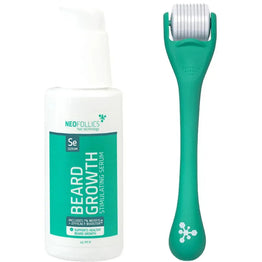
This combination ensures that the beard serum stimulates beard growth and is better absorbed by the skin with the beard roller.
Using the beard roller activates the growth of beard hairs within the beard line.
With this pack you can optimally stimulate your beard growth for 3 months.
With the Neofollics beard growth serum, you have a topical product to stimulate beard growth from the outside.
The beard roller increases the effectiveness of the beard growth serum. With the Neofollics beard growth tablets you stimulate healthy hair growth from the inside out.
Although minoxidil is not suitable for the beard, there is hope for those who want a thicker beard. With Neofollics beard serum + beard roller, you can use effective ingredients to stimulate beard growth.
The beard roller is specially designed to stimulate blood circulation in the beard area to boost hair follicles. While the beard roller can be effective on its own, the combination with the beard serum is particularly successful. This combines numerous clinically tested ingredients that have a positive effect on beard growth. Applying the beard roller beforehand allows the ingredients to be absorbed particularly well by the skin, so the effect is additionally enhanced. With regular use over a longer period, the result in many cases is denser hair growth on the beard.
Advice personalized to your hair needs
Take our Hairtest to find the best products for your hair within 2 minutes!
Although at first glance, it may seem logical to use minoxidil to stimulate beard growth, we cannot recommend the product for this application area. Due to lack of research and possible side effects, the drug should only be used on the scalp. But you don't have to give up the dream of a fuller beard. The Neofollics beard roller has proven to be very effective in combination with the Neofollics Beard Serum when it comes to promoting beard growth, even on possible bald spots. We recommend this combo pack instead of Minoxidil for your beard.
What about minoxidil tablets against hair loss?
A new form of minoxidil has also emerged; in a tablet and even at low doses, minoxidil is said to be effective against hair loss. What about this? Has a different solution been found?
Old wine in new bottles?
What is important to point out is that minoxidil was initially in development as a blood pressure-lowering pill called Loniten. It was then discovered that a side effect of this drug was increased hair growth. The researchers saw its potential and developed the hair growth stimulant minoxidil from it. The reason minoxidil was made into a topical lotion instead of a pill was the blood pressure-lowering effect of the drug in pill form. If minoxidil is applied only to the scalp, it has no effect on the rest of the body. And since you have to keep using minoxidil to maintain the effect, choosing a lotion was the better option because it thus does not affect blood pressure or can have other internal side effects.
Now US dermatologists indicate in a New York Times article that they prescribe minoxidil pills to patients struggling with hair loss. That these dermatologists are so positive about minoxidil pills is due to the discovery that minoxidil in low doses also has a positive effect on hair growth. However, these dermatologists do indicate that more research is needed. In addition, they already admit in The New York Times article that they prescribe minoxidil pills to their patients while it is not approved as a hair loss drug in this form. This can have unwanted side effects. Such as hair growth in places other than the head. In addition, it has an effect on blood pressure. This in turn can be offset with other pills such as spironolactone. The fact that minoxidil is administered in a low dose does mean that the chances of these side effects are relatively low.
Our conclusion on minoxidil tablets
Not all good news, then. There was a good reason that minoxidil was developed as a topical lotion. It reduces unwanted side effects in the body. Besides, its side effects are limited to the scalp. The discovery that minoxidil in pill form in low doses has a positive effect is the main claim made by US dermatologists. So there is potential here, but the dermatologists themselves already admit that the long-term effects of the pills need to be studied better. On top of that, minoxidil tablets are not freely available in the Netherlands. However, you can find remedies containing minoxidil such as Lonnuts. This contains minoxidil, but this drug was developed against conditions such as hypertension (high blood pressure) and is not approved as a hair growth stimulant. It is also available only on prescription from pharmacies.
So the magic word seems to be; research. More research is needed to test the dermatologists' claims. In the meantime, topical lotions to treat hair loss with scientific backing are easily found. There has already been a lot of research done on treatments that work better than minoxidil and have fewer side effects, like Neofollics lotion and Spectral DNC-N. So for now, that is what we would advise.
Sources
Lucky, A. W., Piacquadio, D. J., Ditre, C. M., Dunlap, F., Kantor, I., Pandya, A. G., Savin, R. C., & Tharp, M. D. (2004). A randomised, placebo-controlled trial of 5% and 2% topical minoxidil solutions in the treatment of female pattern hair loss. Journal Of The American Academy Of Dermatology, 50(4), 541–553. https://doi.org/10.1016/j.jaad.2003.06.014
Bak, S. S., Ahn, B. N., Kim, J. A., Shin, S. H., Kim, J. C., Kim, M. K., Sung, Y. K. & Kim, S. K. (2013). Ecklonia cava promotes hair growth.Clin Exp Dermatol,38(8), 904-910. doi: 10.1111/ced.12120
Kang, J. I., Kim, S. C., Kim, M. K., Boo, H. J., Jeon, Y. J., Koh, Y. S., Yoo, E. S., Kang, S. M. & Kang, H. K. (2012). Effect of Dieckol, a component of Ecklonia cava, on the promotion of hair growth.Int J Mol Sci., 13(5), 6407-6423. doi: 10.3390/ijms13056407
Kim, S. K., Kim, J. A., Ahn, B. N. & Bak, S. S. (2013). Hair growth stimulator based on Ecklonia cava extract, preparation method theory, and cosmetic composition containing the same.
Frequently asked questions
No, to maintain the desired results, you need to continue using the product daily. If you stop using the product, hair loss may eventually return.
It's not a big deal to forget Minoxidil once. In that case, do it anyway, unless it is already almost time for the next application, and think about what you can do to do better the next day. Put the product in sight, so you see it when you need to use it. Try to get a rhythm into it, make it a daily ritual. After a while, just like brushing your teeth or styling your hair, it will start to feel more and more normal and come naturally.
Minoxidil can have side effects. The most common are itching and other skin irritations in places where you applied the Minoxidil. Minoxidil contains alcohol, so you might experience a burning sensation and/or (skin) irritations. These irritations sometimes occur in sensitive areas such as around the eyes. Does the product accidentally come into contact with the skin? Then rinse it off a copious amount of running tap water. Does the irritation and itching persist for a longer period of time?
If so, contact your doctor. If you experience any side effects, contact our customer service or your doctor. This also applies to possible side effects not listed in the leaflet.
It means that the Dutch Ministry of Health allows us to sell medicines like Minoxidil online. We have to meet strict requirements, and we are regularly reviewed by the ministry on this.
Minoxidil is only approved for use on the scalp and its safety and effectiveness for facial hair are not known. Application on the face may increase the risk of skin irritation, dryness and other unknown side effects.
Minoxidil can cause side effects on the face, such as redness, scaling and itching. Facial skin is more delicate than the scalp, so irritation can be more intense and harder to treat.
Although some people report seeing results with off-label use, these are anecdotal results. The long-term effects are unknown. No clinical trials have established that minoxidil is safe or effective for beard growth.
Yes, applying minoxidil to the face can lead to unintended side effects, such as itching, redness and irritation. In addition, it is unclear whether stopping minoxidil can lead to patchy or inconsistent beard growth.
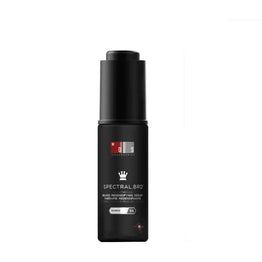
Instead of using minoxidil, which is not designed for facial hair, consider Neofollics beard growth serum or Spectral.BRD beard growth serum. These support skin health and beard care. Consulting a dermatologist may also provide safer, more targeted options to promote beard growth.
Because minoxidil has not been tested or approved for beard growth, the risks do not outweigh the potential benefits. We warn against off-label use because of possible side effects and the lack of verified data on safety.
Yes, but don't do this right after applying minoxidil. Wait at least a few hours. You can wash your hair in the morning, let it dry, apply minoxidil, and only then use other products.
Yes, you can. Minoxidil is often used together with, for example, caffeine shampoo or hair growth supplements.
It's okay to forget to apply minoxidil once. Just do it anyway, unless it's almost time for the next application, and think of what you can do to remember more easily. Put products in plain sight so you see them when it's time to use them. Try to establish a rhythm and make it a daily ritual. After a while it will feel more and more normal, just like brushing your teeth or styling your hair, and it will become second nature.
Minoxidil lotion, often called the liquid form, contains minoxidil in an alcohol-based solution. The foam developed later provides minoxidil in a lightweight, alcohol-free foam base. Both contain the active ingredient in similar concentrations (usually 2% or 5%), but have different formulations and application methods.
Both forms are effective, but lotion (liquid) absorbs slightly better into the scalp due to its alcohol base. Foam, on the other hand, is formulated to spread easily and dry faster, which many users find more convenient.
Minoxidil foam is gentler on the scalp because it does not contain propylene glycol, a common ingredient in lotion that can cause dryness and irritation. Users with sensitive skin often prefer foam.
Foam is generally considered more convenient because of its faster drying time and ease of use. However, lotion is still popular and is often preferred by those with very short hair or those who use it consistently.
It is strongly recommended to choose the 2% variant. Although a 5% version exists (often used by men), it can cause unpleasant side effects in women, such as unwanted hair growth on the face. In addition, women generally have thinner skin than men, so the 2% solution is often effective enough to stimulate the hair follicles.
Because hair loss in women is often diffuse (spread across the scalp) rather than specific areas like the hair line, application requires a different technique than for men. The best method is to part your towel-dried hair into sections about 1 centimetre wide so that you can reach the scalp properly. Spread the product over the entire scalp with your fingertips and then wash your hands immediately. For optimal results, do this twice a day, in the morning and in the evening, with approximately 12 hours in between.
Patience is essential; minoxidil is not a quick fix. Although it tackles the process of hair loss immediately, it usually takes four to six months of consistent use before you see visible results or new hair growth. Research suggests that women under 40 with mild to moderate thinning achieve the best results. If you stop the treatment, hair loss may return over time.
Summary Minoxidil is the only officially recognized and scientifically proven drug in the Netherlands that directly stimulates hair growth by improving blood flow to the hair follicles. Because the drug does not affect hormonal balance, it can be used in various forms of hair loss to stabilize loss and promote regrowth. Consistent use is essential for lasting results, with the first effects on hair density usually becoming apparent after about four months.
About the Author
By Pieter Zee
As a content and hair growth specialist, Pieter has been a valued member of our team of specialists and certified...
As a content and hair growth specialist, Pieter has been a valued member of our team of specialists and certified chemists for many years. He keeps a critical eye on the latest developments, debunking hair myths and making sure no trend goes untapped. This allows him to provide readers with fact-based information about hair loss and scalp problems.