As soon as hair loss becomes noticeable, people quickly decide to fight it with caffeine shampoos such as Alpecin or Isana. After all, these are well-known brands that are easy to find in supermarkets or pharmacies. There is some evidence linking caffeine to hair growth, so incorporating it into shampoos seems like a logical choice. But how effective are well-known caffeine shampoos such as Alpecin, Ahuhu, Cien and Isana? And are there better alternatives?
About the Author
By Pieter Zee
Does caffeine shampoo work against hair loss?
As soon as hair loss becomes noticeable, people quickly decide to fight it with caffeine shampoos such as Alpecin or Isana. After all, these are well-known brands that are easy to find in supermarkets or pharmacies. There is some evidence linking caffeine to hair growth, so incorporating it into shampoos seems like a logical choice. But how effective are well-known caffeine shampoos such as Alpecin, Ahuhu, Cien and Isana? And are there better alternatives?
Research has shown that high concentrations of caffeine in the body reduce the concentration of dihydrotestosterone (DHT). This DHT-inhibiting effect is the basis for the claims that caffeine has a hair growth stimulating effect. DHT is the major culprit in the most common form of hair loss, or Androgenetic Alopecia. This is the hereditary form of hair loss, which approximately 70% of all men will eventually experience. There is also some data that suggests that caffeine may prolong the anagen (growth) phase of the hair cycle.
Hair roots are genetically oversensitive to dihydrotestosterone. This breakdown product of the male hormone testosterone causes hair follicles to shrink, so that fewer hairs can grow. There are several ingredients with DHT-inhibiting effects such as Saw Palmetto, Ecklonia Cava and green tea extract. Caffeine is also one of them.
What's the science behind caffeine and hair loss?
When you look for solutions to hereditary hair loss, a caffeine shampoo often emerges as a popular option. The scientific basis for these products relies heavily on a widely cited study from 2007. In this research, hair follicles from balding men were cultured in a laboratory (in vitro) and exposed to testosterone and caffeine. At the cellular level, the results were impressive: caffeine in low concentrations (0.001% and 0.005%) managed to fully neutralize the growth-suppressing effects of testosterone and even stimulated hair shaft elongation. This sounds like good proof that a caffeine shampoo works, but a critical look at the study is necessary.
The biggest criticism we have, concerns translating findings from a petri dish to the shower. In the study, hair follicles were exposed to a liquid containing caffeine continuously for 120 to 192 hours. This is a fundamentally different scenario than using a caffeine shampoo in the shower, which typically acts on the scalp for only a few minutes before being rinsed away. The researchers themselves indicated that laboratory conditions, such as the lack of blood circulation, differ from natural hair growth. Whether the caffeine from a shampoo can penetrate deep enough into the hair root in that short time to achieve the same effect is not proven in this specific study.
Additionally, the research highlighted an important risk: 'more' is not always better. At higher caffeine concentrations (0.15% or even 0.01%), hair growth was actually suppressed and toxicity occurred, likely due to an overstimulation of the hair follicle metabolism. The formulation of a caffeine shampoo is therefore extremely precise. Finally, it is relevant to mention that this study was financially supported by Dr. Kurt Wolff GmbH, a well-known manufacturer of caffeine-containing hair products (Alpecin, among others). Although the study shows that caffeine has biological potential, caution is advised in assuming that adding caffeine to a shampoo, this automatically stops hair loss.
Alpecin caffeine shampoo
The most well-known caffeinated shampoo on the market is Alpecin. This shampoo can be found in most supermarkets and drugstores. The hair growth stimulating effect of this caffeine shampoo is based on research in which scalp samples were placed in a solution containing testosterone and caffeine. This proved that long exposure to caffeine has a positive effect on hair growth.
However, it is not realistic to immerse your hair in caffeine for a long time. The effectiveness of caffeine in a shampoo is therefore somewhat different in practice than in the controlled environment of a test tube. Further research has shown that caffeine is well absorbed into the hair through the use of shampoos. However, this does not automatically lead to the claim that a caffeine shampoo also has a stimulating effect on hair growth. The dosage in the shampoo also plays a major role in its effectiveness.
In addition, shampoos such as Alpecin contain substances that can irritate the skin. In shampoos and similar products, a distinction is made between active and supportive ingredients. In a caffeine shampoo, predictably enough, caffeine is the active ingredient that is dissolved in other substances such as ethanol and propylene glycol to achieve the right ratio. There is also sodium laureth sulphate in the shampoo. This creates foam. But these three substances have an irritating effect on the skin. In addition, Alpecin contains menthol, which can also be irritating.
Pros
Affordable
Found in shops and pharmacies everywhere
Cons
Contains irritants
Caffeine alone is not enough
Alternatives to caffeine shampoo
So caffeine shampoo is generally considered safe but may not be enough to combat hair loss and it causes mild scalp irritation in some individuals. What else is there?
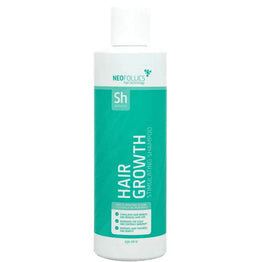
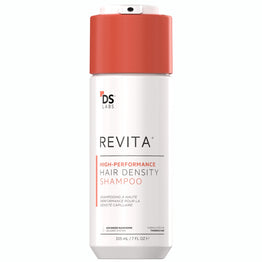
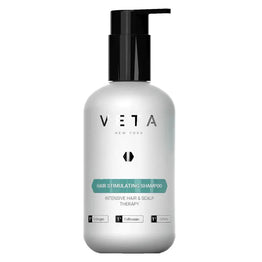
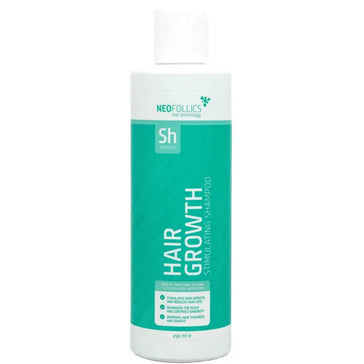
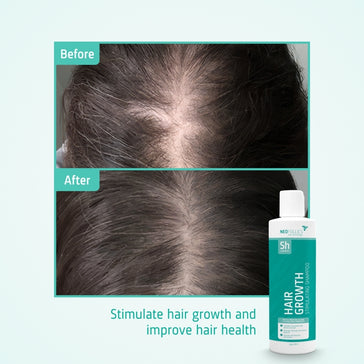
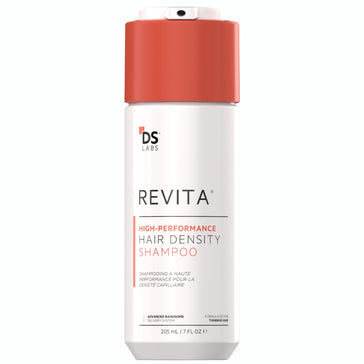
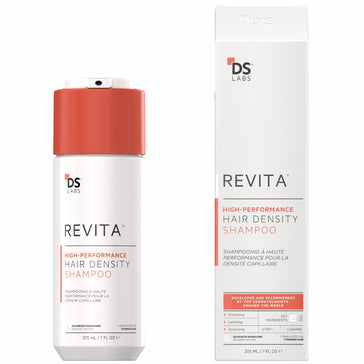
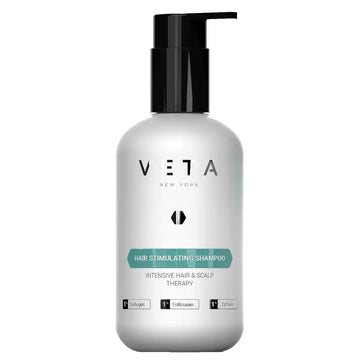
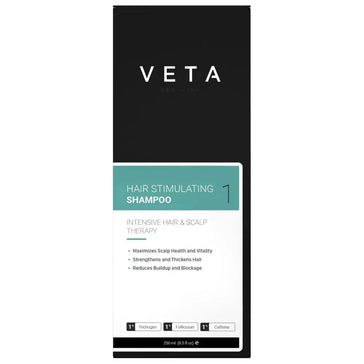
Hairgivers has various hair growth stimulating shampoos in its range that contain caffeine as an ingredient. However, for the shampoos from Neofollics, DS laboratories and Veta caffeine is not the main active ingredient. These shampoos tackle hair loss in multiple ways. Neofollics shampoo, for example, has several ingredients with a proven DHT-inhibiting effect. These are Ecklonia guinea pig, piroctone olamine and green tea extract. Veta contains the important vitamin biotin as well as caffeine as one of its active ingredients. These shampoos have also been included in our range because they do not contain irritants such as propylene glycol, ethanol and SLS.
Contains 1% Piroctone olamine, also effective against dandruff
seven powerful plant extracts including Ecklonia cava and Raspberry ketone
the hair growth molecules Caffeine and Niacinamide
Argan oil and Cinnamon oil to care for the scalp and hair
One of the most well-known and effective shampoos to stimulate hair growth and combat hair loss.
The shampoo also promotes a healthy scalp and thicker, healthier hair.
It is suitable for both men and women predisposed to hereditary/non-hereditary hair loss.
Request a free personal consultation from our specialists. We will gladly help you with advice on how to remedy or prevent your hair problem and which products you can best use for that purpose.
Advice personalized to your hair needs
Take our Hairtest to find the best products for your hair within 2 minutes!
There is scientific evidence that caffeine can neutralize the growth-suppressing effects of testosterone and even stimulate hair growth. However, these results come from laboratory tests on hair follicles, not from clinical trials on people using shampoo. While caffeine has the biological potential to inhibit DHT (the hormone responsible for hereditary hair loss), it is not fully proven that a shampoo with caffeine as its active ingredient stops hair loss in real-world scenarios.
This is a major point of criticism. It has not been proven that the caffeine can penetrate deep enough into the hair root in that short time to achieve the desired results.
We are under the impression that they're not. So not necessarily. While brands like Alpecin are affordable and well-known, they often contain ingredients like SLS (sodium laureth sulphate), ethanol, propylene glycol, and menthol, which can irritate the scalp. We suggest looking for alternatives that combine caffeine with other active ingredients (like biotin or plant extracts) but exclude these harsh irritants.
Summary Caffeine is known for its ability to inhibit the negative effects of the hormone DHT on hair follicles, which is the basis for many popular drugstore shampoos. Research shows that caffeine can indeed be absorbed by hair roots, provided the concentration is high enough and the shampoo is allowed to act long enough. This article compares well-known brands and offers insight into whether a caffeine shampoo is the most effective choice for your particular form of hair loss.
As a content and hair growth specialist, Pieter has been a valued member of our team of specialists and certified...
As a content and hair growth specialist, Pieter has been a valued member of our team of specialists and certified chemists for many years. He keeps a critical eye on the latest developments, debunking hair myths and making sure no trend goes untapped. This allows him to provide readers with fact-based information about hair loss and scalp problems.