Hair loss can be embarrassing and make people feel insecure
Hair loss may seem like a minor issue from the outside. But when it happens to you, it can feel like you are losing a little bit of control every day. Not only over your appearance, but also over how you feel in social situations, at work, during intimate moments, or even just in front of the mirror. The tricky thing is: hair loss is visible, and therefore difficult to ignore. For many people, it becomes something they are constantly preoccupied with, resulting in stress, embarrassment, insecurity and gloom.
About the Author
By Sanne Klomp
Hair loss can be embarrassing and make people feel insecure
Hair loss may seem like a minor issue from the outside. But when it happens to you, it can feel like you are losing a little bit of control every day. Not only over your appearance, but also over how you feel in social situations, at work, during intimate moments, or even just in front of the mirror. The tricky thing is: hair loss is visible, and therefore difficult to ignore. For many people, it becomes something they are constantly preoccupied with, resulting in stress, embarrassment, insecurity and gloom.
Hair loss is visible, and that makes it so difficult mentally
You usually notice hair loss in small signs: photos in which your hair looks different, a hairstyle that is more difficult to style, or comments from those around you such as ‘is your hair different?’. For some, this is mainly a practical nuisance, but for others it can also trigger emotional reactions. Because hair is part of many people's identity, a change in it can have a significant impact.
The daily 'mental strain' that no one sees
You are often confronted with hair loss several times a day. Hair in the sink, in your brush, on your pillow. This causes you to (almost automatically) change your behaviour: you style your hair differently, camouflage it more, spend more time playing with light and angles, avoid wind or rain, or decide not to take a photo. These changes may seem small, but together they can limit your world.
At the same time, it is good to know what is “normal”. On average, you lose up to about 100 hairs a day. Only when more hair falls out than grows back does the hair become thinner.
Why women are often hit extra hard
For many women, hair loss feels less ‘normal’, which makes them feel ashamed more quickly. The pattern is often diffuse: the hair thins everywhere or the parting widens, making it difficult to hide. This can cause insecurity about attractiveness, femininity and control. And if you are already stressed, hair loss can cause additional stress, creating a vicious circle.
Advice personalized to your hair needs
Take our Hairtest to find the best products for your hair within 2 minutes!
What women themselves describe: shame, fear, withdrawal
One of the studies on the mental impact of hair loss in women is ‘P136 Psychological impact of hair loss in women: a qualitative systematic review’ (British Journal of Dermatology, 2025). In this qualitative, systematic review, the researchers collected 26 studies with a total of 1,450 participants, in which women described in interviews and open-ended responses how hair loss affects them.
The results are striking, but unfortunately also very recognisable. 78% of women reported emotional complaints such as shame, anxiety or feelings of depression. And it's not just a matter of ‘feeling a little insecure’: 85% reported a negative impact on their self-image, with themes such as loss of femininity and feeling less attractive. In addition, more than 60% withdrew (partly) from social situations due to shame, which can actually increase loneliness and lower self-esteem.
The hopeful thing is that the same review shows that support can help. Psychological support, such as cognitive behavioural therapy (CBT) and contact with fellow sufferers, improved coping with hair loss and reduced anxiety in 68%. And practical solutions such as a wig, hairpiece or micropigmentation helped 72% to feel more confident and go out more easily. So there are definitely steps you can take to make things a little easier for yourself mentally. Alopecia areata: symptoms are often worse than they appear on the outside
The psychological impact of alopecia areata (patchy hair loss) has also been well researched. The meta-analysis ‘Prevalence and Odds of Depressive and Anxiety Disorders and Symptoms in Children and Adults With Alopecia Areata’ (2023) combined 37 studies. Researchers made an important distinction between official diagnoses (as determined by a professional) and symptoms reported by people via questionnaires.
The figures show that approximately 9% had a depressive disorder and 13% had an anxiety disorder. For specific anxiety disorders, this ranged from 7% to 17%. But if you look at the questionnaires, i.e. how often people feel anxious or gloomy, the figures are higher: 37% reported depressive symptoms and 34% reported anxiety symptoms. This means that more than one in three people with alopecia areata experience clear mental health symptoms, even if they have not always been officially diagnosed.
The researchers also explain why this distinction is important: questionnaires are quick and convenient, but can sometimes “count” physical complaints or illness-related stress as depression/anxiety, making complaints appear higher. Nevertheless, the core message remains very clear: these figures show that it can be psychologically difficult, and that it helps not to just carry on with it, but to seek support in good time.
Facts about the emotional impact of hair loss based on research
78%
Of women have emotional complaints
85%
Of women have a negative self-image
60%
Of women withdraw from social situations
1 in 3
People with alopecia areata experience mental health issues
From 'quickly trying something' to a plan that works
If hair loss is bothering you, you want to do something about it today. However, trying out random products usually doesn't work, especially if you don't know what the cause is. An approach usually works better if you focus on two things: you tackle your hair growth in a targeted way and at the same time take good care of yourself mentally.
How to help your hair (and yourself) move forward
The best route depends on your type of hair loss and your scalp. It often starts with a strong foundation: a healthy scalp. Therefore, consider a basic routine with a hair growth stimulating shampoo and conditioner as the foundation for a healthy scalp, supplemented with a lotion that you use consistently.
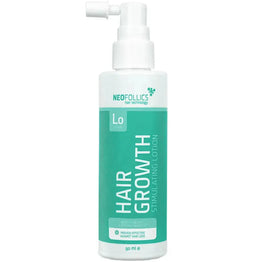
Six powerful plant extracts including Ecklonia cava and Raspberry ketone
Peptides that improve scalp blood flow and inhibit inflammation
Hair growth molecules Adenosine, Vividine and Aminexil
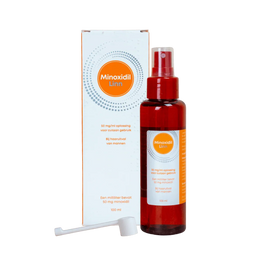
The form of Minoxidil we recommend for most men.
The 5% concentration has been shown to be more effective than 2% in stimulating hair growth.
Minoxidil can provide visible hair growth after 4 months with effective use.
The form of Minoxidil we recommend for most men.
The 5% concentration has been shown to be more effective than 2% in stimulating hair growth.
Minoxidil can provide visible hair growth after 4 months with effective use.
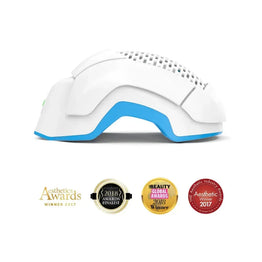
Sometimes extra support is beneficial. Consider LLLT (low-level laser therapy), which can help stimulate hair growth in certain situations and is even recommended for hair loss after chemotherapy. And in some cases, PRP is used as a complementary treatment. What we want to emphasise is that it's all about finding the best match for your hair problem.
Not sure what's right for you? Then the online Hair Test is a logical first step. In about 2 minutes, you'll gain insight into your hair situation and receive a personalised treatment plan, so you don't have to guess, but can get started right away.
Advice personalized to your hair needs
Take our Hairtest to find the best products for your hair within 2 minutes!
In addition, you can always contact our customer support team.
Sources
Mehra, S. (2025). P136 Psychological impact of hair loss in women: A qualitative systematic review. British Journal of Dermatology, 193(Suppl 1), ljaf085.164. https://doi.org/10.1093/bjd/ljaf085.164
Lauron, S., Plasse, C., Vaysset, M., Pereira, B., D’Incan, M., Rondepierre, F., & Jalenques, I. (2023). Prevalence and odds of depressive and anxiety disorders and symptoms in children and adults with alopecia areata: A systematic review and meta-analysis. JAMA Dermatology, 159(3), 281–288. https://doi.org/10.1001/jamadermatol.2022.6085
Summary The psychological impact of hair loss is discussed in detail in this blog, focusing on the invisible mental strain this process brings. Often thinning hair is accompanied by feelings of shame and a loss of control, which can affect social interactions and self-image. The article offers recognition of these emotions and emphasizes that understanding the causes is the first step toward regaining self-confidence.
About the Author
By Sanne Klomp
As a content and hair growth specialist, Sanne makes complex hair knowledge understandable. Working closely with our product manager and...
As a content and hair growth specialist, Sanne makes complex hair knowledge understandable. Working closely with our product manager and certified chemists, she translates complex information into understandable advice. In this way, she contributes to Hairgivers' mission to offer the right solution for every problem.