Clascoterine for hair loss: Does this acne treatment really work for hair loss?
If you follow the news about scientific research into hair loss, you may have come across the term clascoterone. There is a lot of talk about promising results from new clinical studies focused on the treatment of male pattern baldness. In this blog, we take a closer look at what this drug is exactly, what the recent research results could mean for you, and how you can tackle your hair loss in the meantime.
Clascoterine for hair loss: Does this acne treatment really work for hair loss?
If you follow the news about scientific research into hair loss, you may have come across the term clascoterone. There is a lot of talk about promising results from new clinical studies focused on the treatment of male pattern baldness. In this blog, we take a closer look at what this drug is exactly, what the recent research results could mean for you, and how you can tackle your hair loss in the meantime.
Clascoterone is an acne treatment marketed under the brand name Winlevi. It is a relatively new drug that was only approved by the European Medicines Agency last year and is available exclusively on prescription. In the United States, however, clascoterone 1% cream is one of the most commonly prescribed treatments for acne.
Why is clascoterone interesting for hair loss?
It is a so-called androgen receptor inhibitor for local use on the skin. In acne, it helps to reduce the influence of male hormones (or androgens) on sebum production in the skin. And the main cause of hereditary hair loss happens to be an androgen.
How it works: when men start to experience hair loss, it is generally hereditary. A by-product of the male hormone testosterone, called dihydrotestosterone, attacks the hair follicles until they are completely reduced. The reason clascoterone is now in the spotlight is that the mechanism against acne can also help against hair loss.
The substance binds to the androgen receptors in the hair follicles, where it reduces sebum production. But it also inhibits DHT in the hair follicle. In this way, it tackles the cause of hair loss. This is in contrast to minoxidil, for example, which works in a different way.
Unlike other anti-androgens, such as finasteride and dutasteride, clascoterone can act locally on the affected areas, reducing the risk of side effects. This property makes clascoterone potentially attractive to people who want to target hair loss without the side effects of medications that work throughout the body.
¿No sabes qué producto elegir? Haz nuestro test gratuito.
Te recomendamos los mejores productos para tu cabello en solo unos pasos.
The good news came from the pharmaceutical company Cosmo Pharmaceuticals. They recently announced the results of two large phase 3 studies, called SCALP 1 and SCALP 2, in which more than 1,400 men participated. The aim was to test the effectiveness of a 5% clascoterone solution in the treatment of male hair loss.
At first glance, the figures from these studies are promising. One of the studies reported a relative improvement in hair growth of no less than 539% compared to the placebo. The second study showed an improvement of 168%. Although these percentages sound high, it is important to look closely at the results.
These percentages reflect the improvement compared to the placebo group, which may have actually lost hair during the study. This does not necessarily mean that clascoterone will increase your total hair count by 500%. The large differences between 539% and 168% are also noteworthy. Nevertheless, both studies demonstrated a statistically significant increase in the number of hairs in the treated area.
Difference from existing treatments
What makes clascoterone interesting is that it has a topical anti-androgenic effect. This means that it has an effect similar to finasteride, but can be applied locally. Finasteride comes in pill form and must therefore be taken orally. This means it works throughout the body. For some users, this can lead to unpleasant side effects. These side effects include impotence, reduced libido, erectile dysfunction and depression.
Applying clascoterone to the scalp means that it is quickly broken down by the body. The study mentioned above showed that the side effects in the treatment group were similar to those in the placebo group, and there was no effect on the hormones in the body. This could make it an attractive option in the future for men who do not want to take pills because of the possible risks.
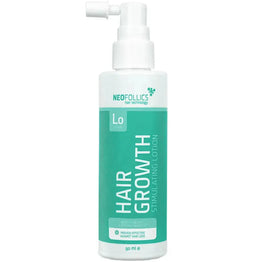
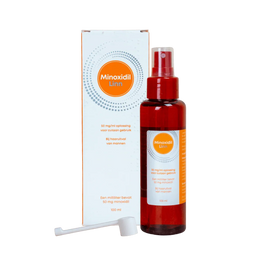
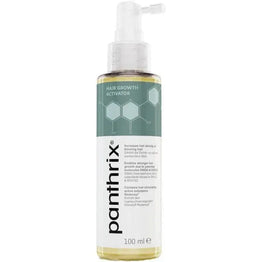
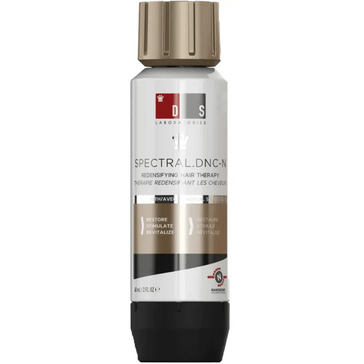
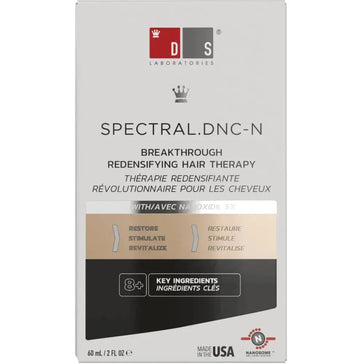
Incidentally, topical finasteride also works locally, but this is not available in the United Kingdom. Other products that work on the scalp are Neofollics lotion, minoxidil and Panthrix.
La loción Neofollics contiene una alta concentración de 10 ingredientes activos de eficacia probada combinados en el complejo Neoxyl para el crecimiento del cabello.
Moléculas de crecimiento capilar Adenosina, Vividina y Aminexil
Seis potentes extractos de plantas, como la Ecklonia cava y la cetona de frambuesa
Péptidos que mejoran el flujo sanguíneo del cuero cabelludo e inhiben la inflamación
La forma de Minoxidil que recomendamos para la mayoría de los hombres.
La concentración del 5% ha demostrado ser más eficaz que la del 2% para estimular el crecimiento del cabello.
Minoxidil puede proporcionar un crecimiento visible del cabello después de 4 meses con un uso eficaz.
Redensyl, un ingrediente activo con dos moléculas patentadas conocidas por su capacidad para restaurar las células pilosas inactivas.
El suero contiene ingredientes activos altamente eficaces que estimulan la circulación sanguínea y aportan vitaminas y nutrientes vitales a los folículos pilosos.
Esta loción estimula el crecimiento del cabello y combate la caída hereditaria.
Despite the positive news, patience is still a virtue. It is important to emphasise that this drug has not yet been approved for hair loss. Clascoterone does not appear to be available on prescription in all countries within the EU.
The manufacturer plans to complete the required 12-month safety tests in the spring of 2026. Only then can applications for approval be submitted to authorities such as the US FDA and European EMA. When this will be is not known. What is known is that it could take a long time.
If everything goes according to plan, this could be the first treatment with a new mechanism of action for androgenetic alopecia in thirty years. But that is still some way off.
How can you tackle your hair loss now?
New medications for hair loss may still be some time away, but that doesn't mean you can't do anything. Preserving the hair you have starts with a healthy foundation.
A hair growth stimulating shampoo and conditioner forms the basis of a treatment for hair loss.
A lotion works more intensively than a shampoo or conditioner because it is a leave-in product. Because you do not rinse it out, the active ingredients have more time to penetrate the scalp.
A dietary supplement specially formulated to treat hair loss is an effective treatment that tackles hair loss from within.
Conclusion about clascoterone
Developments surrounding clascoterone offer new hope for anyone dealing with hereditary hair loss. The idea of a new, local anti-androgen hair growth product sounds like a great development. However, we must remain realistic and await final approval. Until then, it is wise to focus on what you can do: keep your hair in top condition with the right care and products. Would you like to start tackling hair loss today? Then take a look at our extensive range of scientifically proven products that have been specially selected to combat hair loss and support hair growth.
Sun, H. Y., & Sebaratnam, D. F. (2020). Clascoterone as a novel treatment for androgenetic alopecia. Clinical And Experimental Dermatology, 45(7), 913–914. https://doi.org/10.1111/ced.1429
Kircik, L. H. (2021). Androgens and acne: perspectives on clascoterone, the first topical androgen receptor antagonist. Expert Opinion On Pharmacotherapy, 22(13), 1801–1806. https://doi.org/10.1080/14656566.2021.1918100
Pieter lleva varios años trabajando como redactor de contenidos y especialista en crecimiento del cabello para Hairgivers. Escribe a diario...
Pieter lleva varios años trabajando como redactor de contenidos y especialista en crecimiento del cabello para Hairgivers. Escribe a diario sobre la caída del cabello, los problemas del cuero cabelludo y los mejores tratamientos para el debilitamiento del cabello. Sigue de cerca las últimas noticias del sector del crecimiento del cabello e investiga exhaustivamente sobre nuevos avances y tratamientos eficaces.